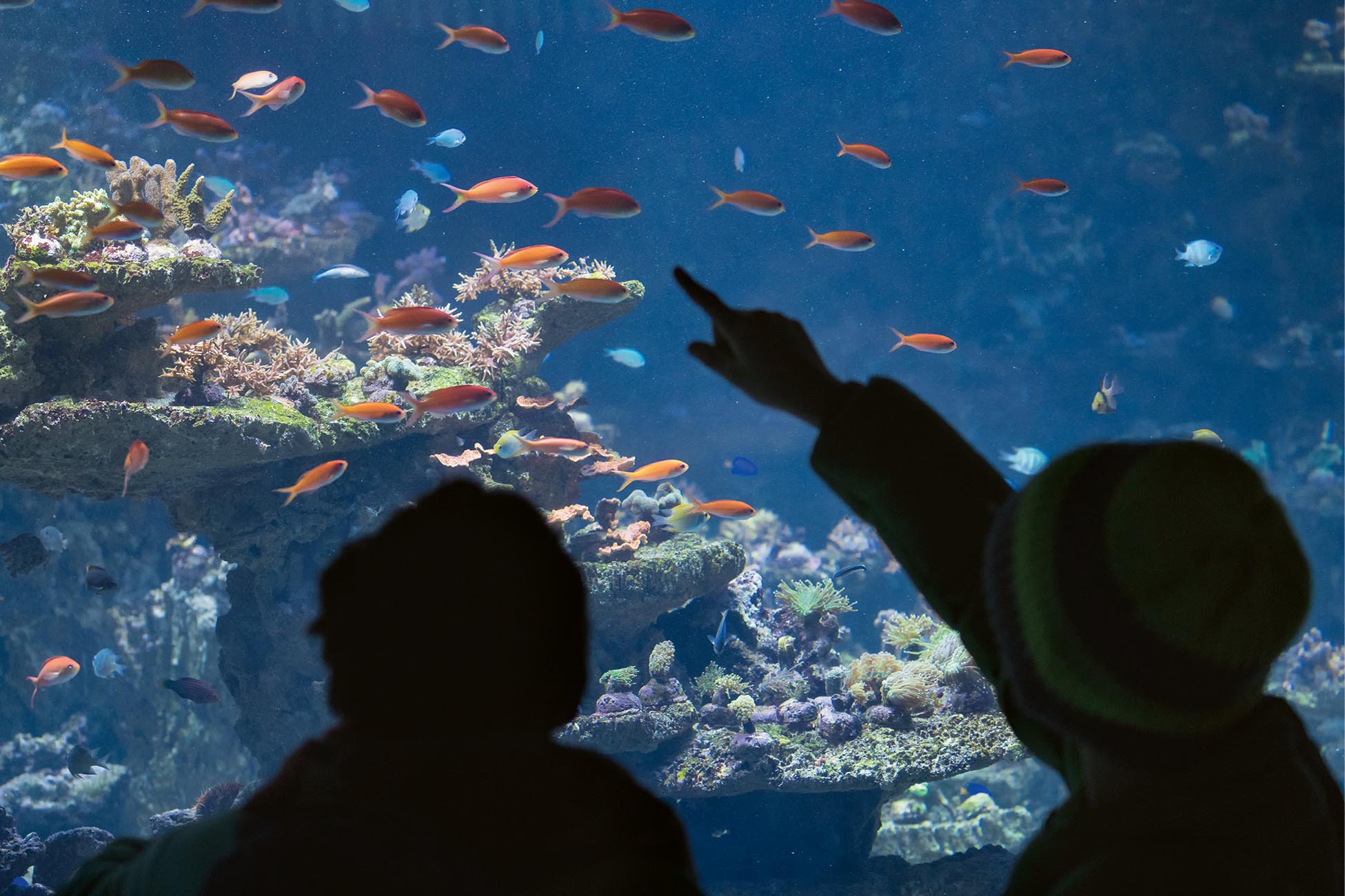
Interview
Mr. Dressen, do you remember an encounter with an animal that shaped your life?
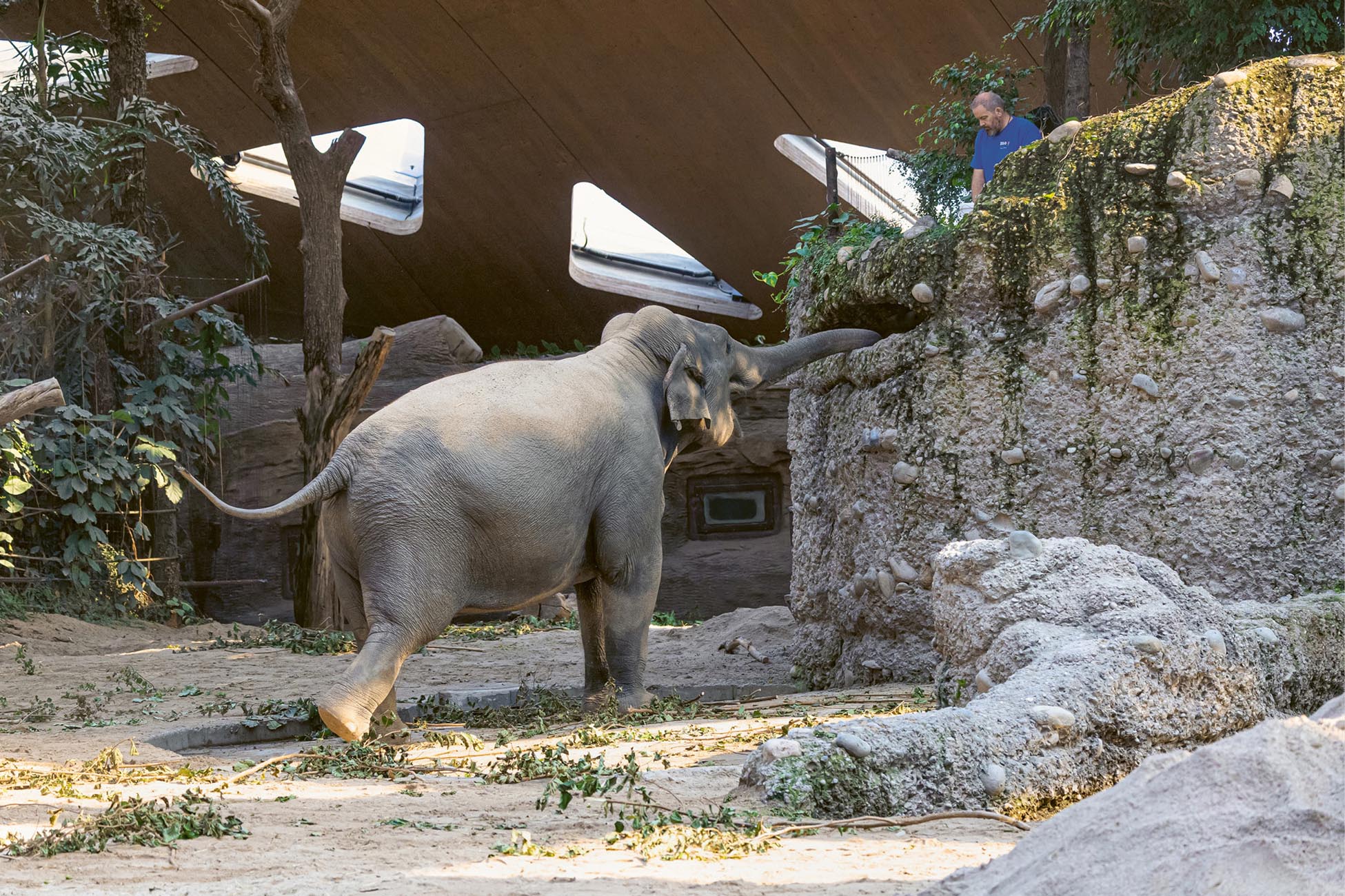
There are a great many. As a small child, I was fascinated by the common toad. Later, it was the moments when I had the opportunity to work with animals. For example, I spent six months in a national park in Argentina and rode out every day on the same horse. Over time, we got to know each other better and better, and a relationship developed. That fascinates me. Working as a zookeeper also gave me the opportunity to encounter animals up close that you normally only see from a distance. The first time I was so close to an elephant that I could see the texture of its skin and its fine hairs, feel its breath and sense my body vibrating with it – that was an absolutely remarkable experience.
Where does your fascination with animals and nature come from?
Nature is incredible. Recently, a dragonfly flew into our house and my children and I watched it. The structure of its wings is a marvel – in the dragonfly just as much as in the fly that we find so annoying. In the stress of everyday life, we unfortunately too rarely walk through nature with our eyes open. You don’t have to fly to Africa to experience fascinating nature. If you go outside here and consciously look around, you realise that nature is phenomenal. That has always inspired me.
Is there a particular animal at Zurich Zoo with which you have a special connection?
To give the underdogs of the animal kingdom a voice too: the naked mole-rat. It’s easy to think a giraffe, a gorilla or a king penguin is great, but the rather unattractive naked mole-rat has incredibly exciting biology. They are highly social animals. The naked mole-rat has a special place in my heart.
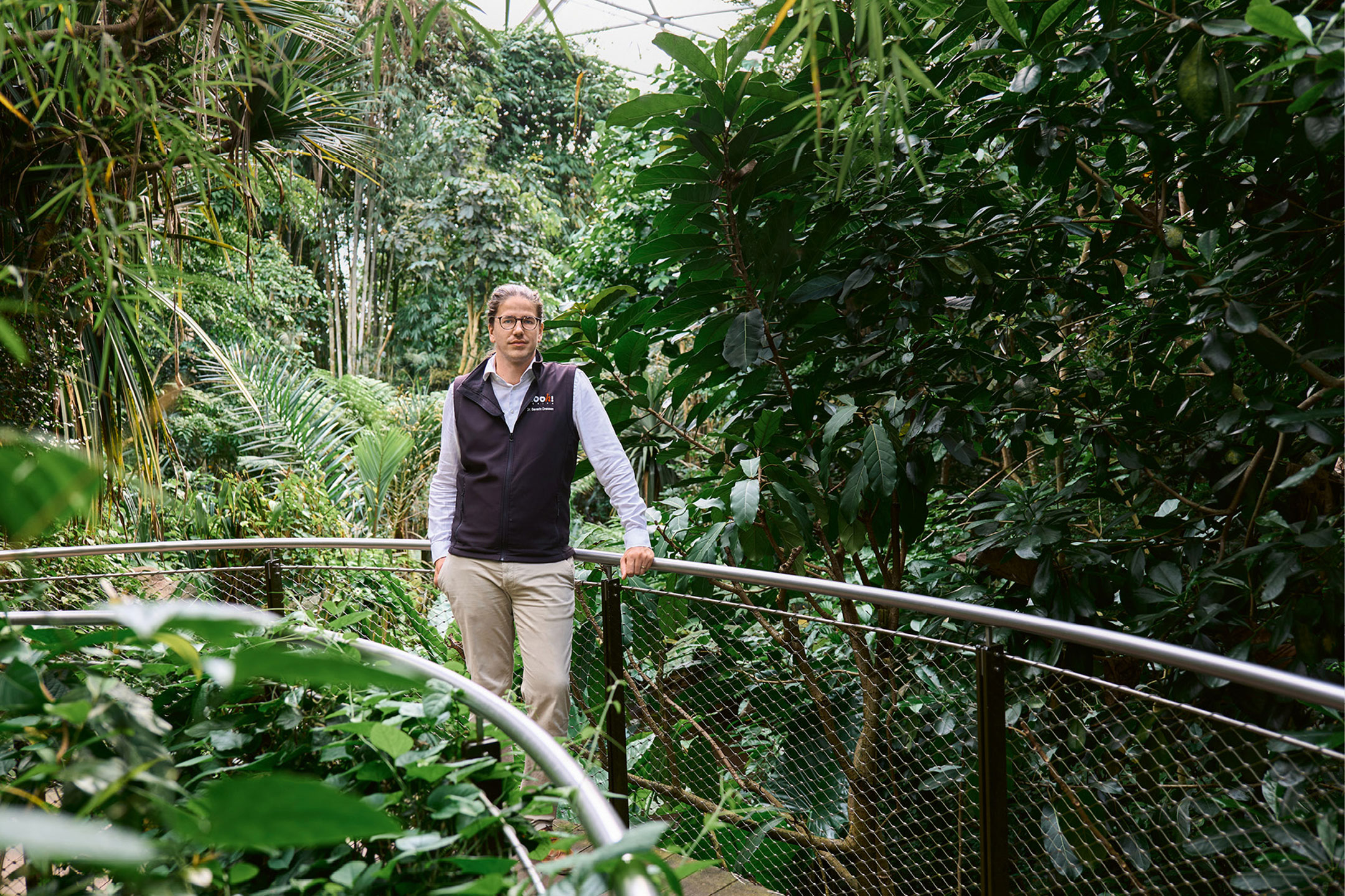
How do you define successful encounters between humans and animals?
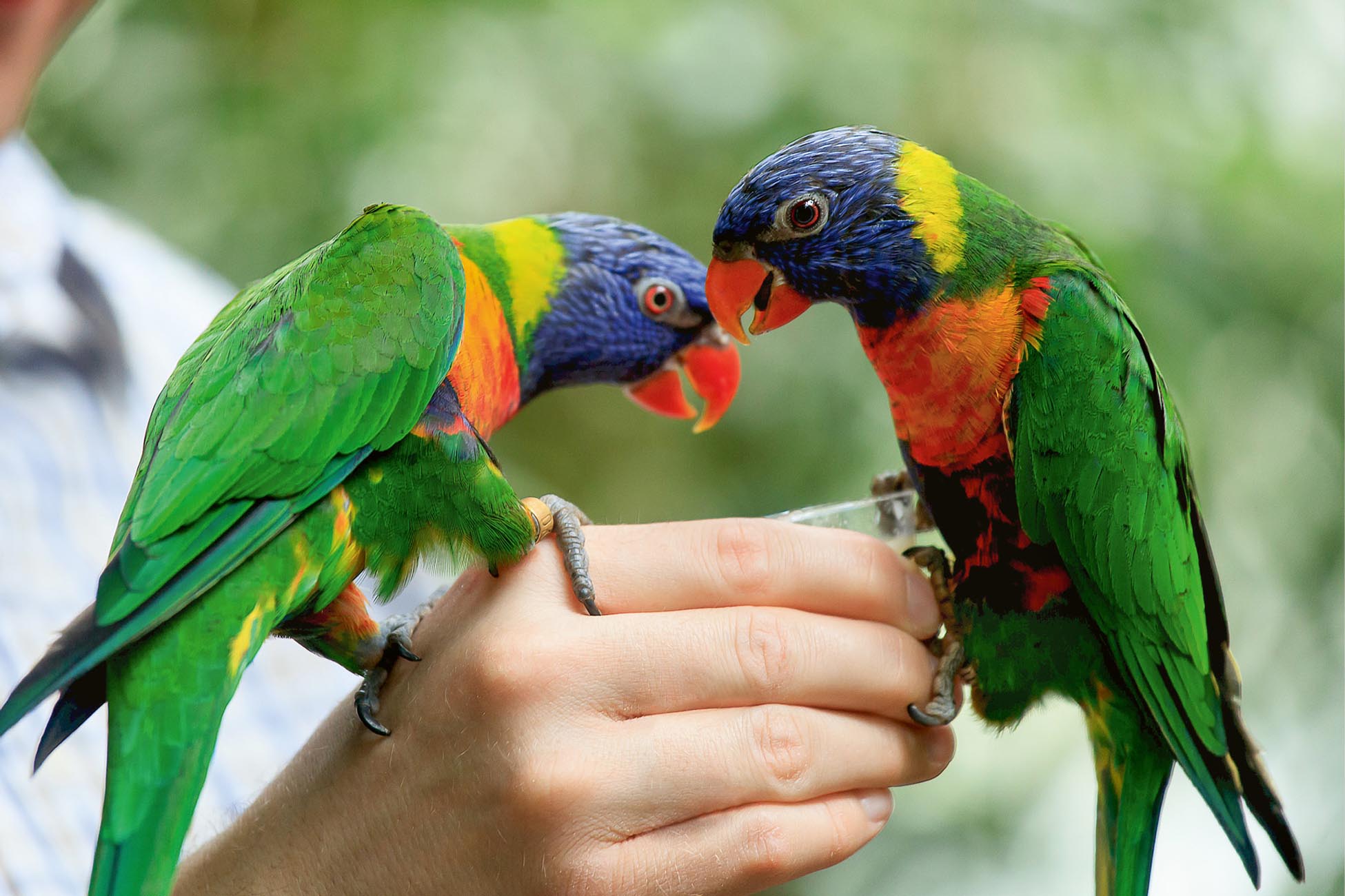
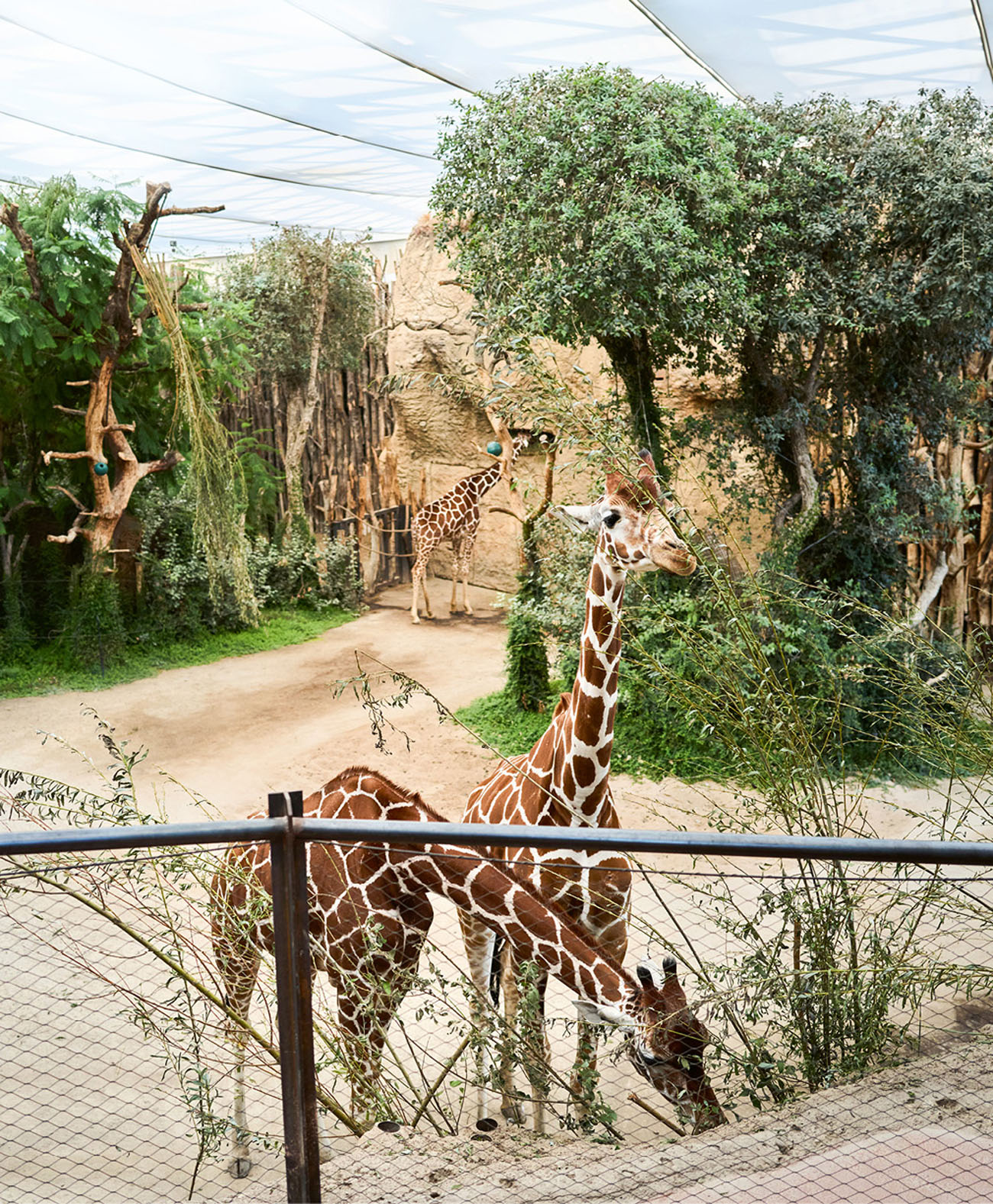
Here we face a fundamental dilemma. On the one hand, we humans function according to the simple principle that we protect what we know and like. At the zoo, we therefore try to create emotional moments for our visitors and inspire them with the beauty of the animal world. The aim is to show them that the animal world is worth protecting. On the other hand, we have to be careful not to humanise the animals and to make sure that the encounters we create are not negative for them. One example: visitors can feed the giraffes here, and that is an impressive experience for people because they get so close to these beautiful animals. At the same time, we definitely don’t want the giraffes to be conditioned to approach people. That would be a kind of animal husbandry we do not stand for. In this context, it is therefore important that food is also offered in many other places in the enclosure. The animal must have a choice and come voluntarily – not because it is hungry. That may well mean that the giraffe goes somewhere else to eat.
«Animal welfare comes first.»

How does Zurich Zoo encourage such encounters?
I think encounters are more authentic when we take people into the animals’ habitats. In the Masoala Rainforest, and in a few years also in the new Pantanal Aviary, you are right in the middle of it and share the habitat with the animals. The animals in the Masoala Rainforest are actually rather boring in themselves: ducks, lizards, even the chameleons – if they were in a terrarium, you would take a quick look and walk on. But the moment you find them yourself, without any barriers, you become an explorer. That is something completely different. Those are the encounters we want to make possible.
Encounters create bonds. Right at the start of your time as zoo director, you had to say goodbye to some animals. How do you deal with it when an animal dies at Zurich Zoo?
Personally, I can cope with it well. I am passionate about the animals, but I don’t have an individual bond with them. I manage an SME with 548 employees. It’s certainly different for our visitors. But the zoo is not an animal shelter; our task is to preserve species. Sometimes we have to kill animals for which there is no room elsewhere within the reserve population, or which can no longer actively contribute to species conservation, for example because of their genetics or their age. They are then used as feed or made available for research. Nobody enjoys it, but it is necessary.
How do you see the role of zoos in today’s society?
If zoos didn’t exist in 2024, we would have to invent them, because they are more important than ever. We are facing a biodiversity crisis. Zoos are the only type of institution with the potential to tackle it in four different ways. Species conservation, nature conservation, education and research: these are the four pillars on which modern zoos are built. No other institution can contribute to all four at the same time. Non-profit organisations do excellent conservation work, but they don’t have the expertise to protect and research endangered species with reserve populations. A university can carry out biodiversity research, but its knowledge doesn’t reach many people. Only a zoo can do all of this. And by that I mean modern, scientifically run zoos that are accredited by the European umbrella organisation EAZA (European Association of Zoos and Aquaria).
What educational goals does Zurich Zoo pursue?
As a rule, our visitors don’t come to us because they want to learn something. They come to have a good time. That means the recreation and experience factor is central, and that is entirely legitimate. But we don’t keep the animals so that visitors can have a good time. The 1.4 million people who visit us every year contribute to species and nature conservation, education and research. Those are the reasons the zoo exists. That is huge potential. In future, we want to make even more of the positive emotions a visit triggers and show what each individual can do to protect biodiversity. We already do this very well on guided tours. We have a great team of highly motivated guides who do a brilliant job. With the 99 per cent of visitors who simply walk through, we can still improve. We’re working on it.
«The 1.4 million people who visit us every year contribute to species and nature conservation, education and research.»
How do you balance visitors’ desire to be close to the animals with the animals’ welfare?
Animal welfare comes first. The enclosures are designed to be good for the animals. There are large parts of the enclosures where the animals cannot be seen at all. You have to take your time if you want to be sure of spotting an animal. But most of our visitors don’t expect the animals to be served up to them on a platter. At the same time, the pandemic confirmed to us that in modern enclosures, the presence – or absence – of visitors had no effect at all on the animals. Their behaviour did not change during lockdown. Just a few species, such as the gorillas, missed people. But that is because they were hand-reared – a practice we no longer follow today.
What role do digital technologies play in shaping encounters?
We look into anything that helps us inspire our visitors and give them information. Our priority is to provide content via our app. That is the best way to meet the challenge of multilingualism. At the same time, the app offers great potential for augmented reality. We are currently in the evaluation phase and testing various products. So far, none has convinced us in terms of quality. If we want to depict nature, it has to be good. Virtual reality is also exciting, but as long as it is tied to special devices and doesn’t run on visitors’ own headsets, VR can only be used occasionally on guided tours and isn’t suitable for large numbers of people. On peak days, we have 10,000 visitors at the zoo.
Species extinction, environmental destruction, climate change: in your opinion, how can people and nature live together sustainably?
That’s a big question. The fundamental problem is that it involves processes that are not immediately visible. For us humans, what happens before our eyes is much more important. Climate change happens over a long period of time. The biodiversity crisis is complex, and for many species we don’t know exactly what role they play in the ecosystem and what impact their extinction would have. By the time we find out, it will already be too late. There are two basic philosophies for meeting these challenges. The first is renunciation. In Western societies – and I don’t exclude myself here – we have a standard of living and level of resource use that is unprecedented. Renunciation is very difficult for us: even for the sake of our own health, let alone for the climate. The second is technology: the idea that technological advances will save us. The solution probably lies somewhere in between. However, I think that in many areas we have crossed the threshold and must admit to ourselves that untouched nature no longer exists. We tend to romanticise nature and forget that today’s natural spaces are dominated by humans. What remains is to create enough protected areas where nature can coexist with us.
«Species conservation, nature conservation, education and research: these are the four pillars on which modern zoos are built.»
Severind Dressen
What projects are under way at Zurich Zoo to further strengthen its role as a place of encounter, conservation and education?
We will shortly be opening a research station with climate-controlled rooms, where researchers from Swiss and international universities will work. Here, our visitors will gain insights into the research and breeding of endangered frogs, fish, reptiles and insects. We particularly want to show children, in a playful way, how important research is for biodiversity. Panterra, our new enclosure for big cats, is creating a new habitat with an immersive character. Thanks to a rotation system, each species of cat stays among its own kind, but they take turns using all four areas of the enclosure, which provides variety. In addition, hunting simulations encourage the animals’ natural behaviour. Also new is the insect forest, which we are building in the former lion house. With no glass panes in between, it allows close-up encounters with countless creepy-crawlies – for the brave, without a fear of insects. And finally, our biggest current project: the Pantanal, an aviary for South American animals. As in the Masoala Rainforest, visitors will be able to experience the South American wetland of the same name from the water and from above, and have immersive encounters with the animals in the midst of their habitat.